1/3
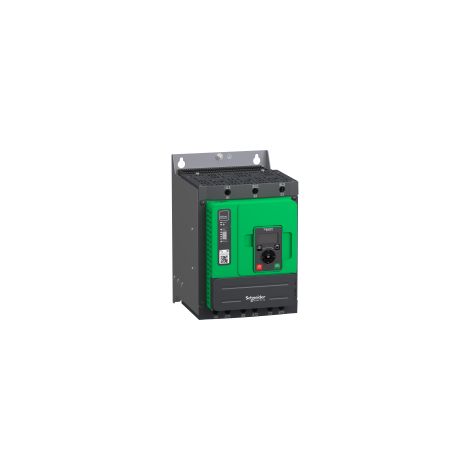
Variador de velocidad ALTIVAR 630 18,5 kW 400/480V IP21 para motores asíncronos y síncronos
15 € de regalo a partir de 250 €
con el código
con el código
¿Compras para tu empresa?
Precios negociados sin IVA hasta -20%
Producto similar con entrega
'/%3E%3C/svg%3E)
Eosnow Convertidor de frecuencia 7.5KW Regulador de velocidad del motor Entrada monofásica de 220 V Salida trifásica de 380 V
238,54 €
23
Vendido por Latiendadeelectricidad y 1 otro vendedor
¡Creemos que esto puede interesarte!






Comparar con artículos similares
Información del producto
Descripción
Variador de velocidad Altivar 630 de 18,5 kW, diseñado para motores síncronos y asíncronos. Con grado de protección IP21, soporta tensiones de 380 a 480 V. Ideal para aplicaciones en procesos industriales y utilidades, con múltiples protocolos de comunicación.El Altivar 630 18,5 kW 400/480V TRI es un variador de velocidad de la gama Altivar Process ATV600, diseñado específicamente para aplicaciones en procesos y utilidades. Este dispositivo, conocido como ATV630, es ideal para motores síncronos y asíncronos, ofreciendo una solución eficiente y versátil para el control de velocidad en diversas industrias.
Con una potencia nominal de salida de 18,5 kW y un rango de tensión de alimentación de 380 a 480 V, el ATV630 se adapta a diferentes configuraciones eléctricas. Su grado de protección IP21 asegura un funcionamiento seguro en entornos industriales, mientras que su refrigeración forzada garantiza un rendimiento óptimo incluso en condiciones exigentes.
Entre sus características técnicas destacan:
Corriente de línea: 33,4 A en 380 V y 28,9 A en 480 V.
Frecuencia de alimentación: 50...60 Hz.
Protocolo de comunicación: Modbus TCP y Ethernet.
Capacidad de sujeción: 50 m (C2) y 150 m (C3) según EN/IEC 61800-3.
Rango de frecuencias de salida: 0,1…500 Hz.
Función de seguridad: STO (par seguro desactivado) SIL 3.
Temperatura de funcionamiento: -15…60 °C.
Montaje en pared, con dimensiones de 211 mm x 546 mm x 232 mm y un peso de 14,2 kg.
Resistencia a vibraciones y choques según IEC 60068.
Certificaciones: UL, CE, ATEX, entre otras.
Características
- MarcaSCHNEIDER
- Forma de onda de salidaOnda cuasi-senoidal
- Índice de protecciónIP21
- Largo211 mm
- Tipo de conversiónCA a CC
- Referencia ManoManoME9959935
- MMID753012786898
- Ref. del fabricanteatv630d18n4
- EAN3606480701399
'/%3E%3C/svg%3E)
 Visitar la tienda SCHNEIDER
Fundada en 1934 y originalmente conocida como Schneider Frères, esta innovadora marca fue creada por los hermanos Schneider, un equipo ganador compuesto por un ingeniero visionario y un líder carismático.
Actualmente, el objetivo de Schneider es combinar un diseño de calidad con las tecnologías más eficientes, facilitando así la vida cotidiana en tu hogar.
Estás aquí:
Categorías asociadas
Hidroestufas pellet
Estufa pellets 14 kw
Estufa pellet 12 kw
Estufa pellet 15 kw
Estufa pellets 10 kw
Hidro estufa pellets
Estufa de pellet sin electricidad
Cocina pellets
Estufa pellets esquinera
Estufa pellets bronpi
Estufa pellet canalizable
Estufa de pellet sin salida de humos
Estufa pellets silenciosa
Estufa pellet esquina
Estufa pellet radiadores
Estufa pellet wifi
'/%3E%3C/svg%3E)